Best Sectors to Invest in Africa and How to Assess Them in 2026
Explore the best sectors to invest in Africa, from energy and logistics to food processing, with a practical framework for assessing risk. Talk to our team.

The best sectors to invest in Africa are those where an investor can connect a specific source of demand to a business capable of earning and collecting sustainable revenue. A continental growth story is useful context, but it cannot replace an assessment of the asset, customer and operating market.
UN Trade and Development’s World Investment Report 2026 puts African foreign direct investment inflows at about USD 70 billion in 2025. Its accompanying analysis highlights strategic industries while questioning how investment can translate into broader industrial development.
That distinction matters for capital allocation. Announced projects, total FDI flows and the returns available to a particular investor are different measures. A large project can change a national or continental total without making every business in that market more attractive.
For an investment committee, the useful question is therefore not which African industry sounds most promising. It is where demand, operating capability, financing and a credible route to returns come together.
What makes the best sectors to invest in Africa investable
An investable sector thesis identifies who pays, why they pay and what prevents competitors from eliminating the expected margin. It also explains the capital required before those payments arrive.
Demand can be substantial while commercial viability remains weak. Electricity is essential, but an energy project still depends on payment arrangements. Food demand is recurring, but a processor can struggle if inputs are seasonal and working capital is expensive.
Our Africa investment outlook explains the broader structural case. Sector selection takes that analysis further by testing the mechanics of revenue and risk.
Use a common framework across opportunities so that a compelling presentation does not receive a lower standard of scrutiny than a less fashionable but profitable business.
| Sector | Revenue to investigate | Risk that can undermine the thesis |
|---|---|---|
| Energy | Contracted electricity or service payments | Counterparty weakness and currency mismatch |
| Logistics | Storage, handling and transport demand | Insufficient throughput and operating bottlenecks |
| Food processing | Repeat purchases and distribution access | Input variability and working capital pressure |
| Critical minerals services | Contracts with viable operating projects | Customer concentration and commodity exposure |
| Digital infrastructure | Enterprise connectivity and capacity demand | Power costs and uncertain utilisation |
| Healthcare services | Affordable demand and reliable payment | Staffing constraints and reimbursement delays |
| Tourism | Occupancy and spending across a full cycle | Seasonality, access and capital intensity |
This is a screening framework, not a ranking or a forecast of sector returns.
Where is the opportunity in energy
Energy investment can address a measurable operating problem: businesses need reliable power at a cost they can absorb. The opportunity varies between generation, distribution related services, storage and solutions for commercial customers.
Begin with the payer. A project serving a financially credible industrial customer has a different risk profile from one relying on many small collections or a single public counterparty. Examine the contract, payment history and practical remedies if invoices are not settled.
Then test the currency relationship. Equipment and debt may be priced in a foreign currency while customer revenue is local. A nominally attractive tariff can produce a weak return when exchange movements and payment delays are considered together.
Investors should also examine maintenance, spare parts and system performance. The initial installation is only the beginning of the operating commitment. A technically strong project needs a financially workable service model throughout its life.
Why are logistics and industrial services worth examining
Logistics businesses can earn revenue by reducing costs that customers already experience. Storage, cold chain, handling and dependable transport may improve the economics of several industries at once.
The investment case should start with actual flows of goods. Identify customers, volumes, routes, seasonality and competing facilities. A strategically positioned warehouse is not automatically a commercially viable warehouse if customers cannot or will not use it at the proposed price.
For a cold storage asset, test utilisation across the year and establish who bears losses during a power interruption. For an industrial services company, examine maintenance capacity, spare parts availability and customer concentration.
The strongest opportunities may be relatively specialised. An investor with operating expertise in one supply chain can sometimes assess a focused service business more accurately than a large, unfamiliar infrastructure project.
What is the investment case for agriculture and food processing
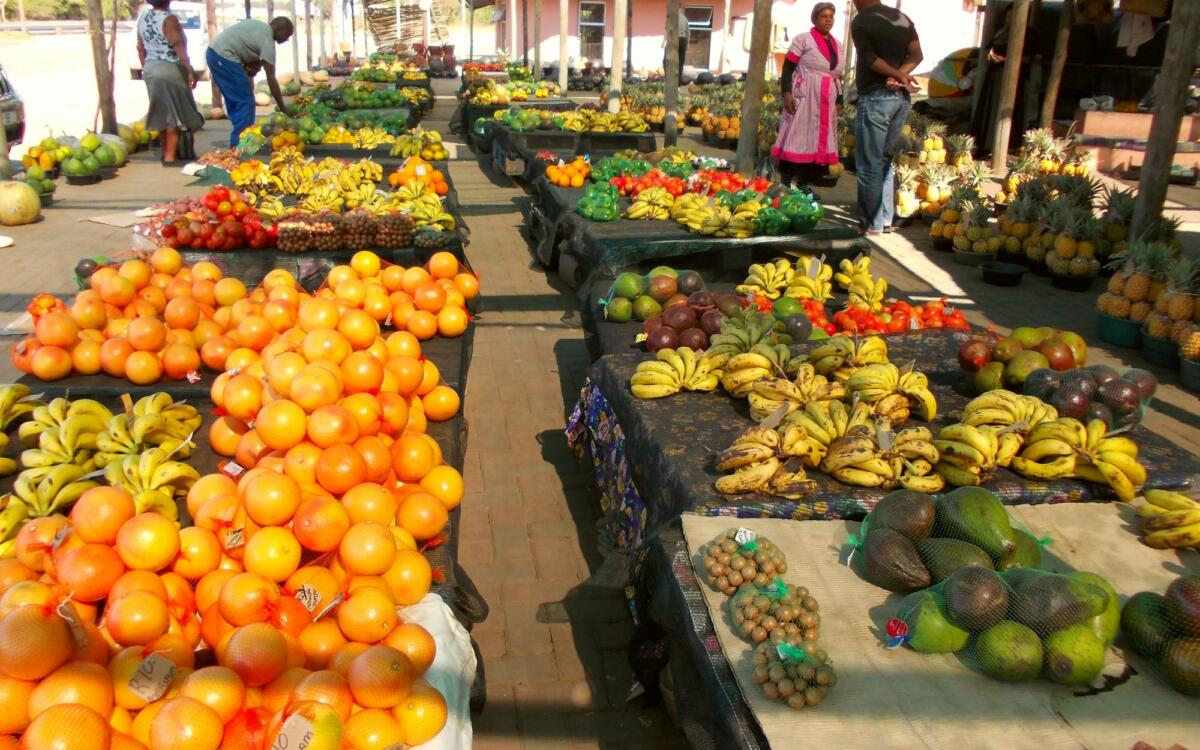
Food processing can connect agricultural production to more consistent quality, storage and distribution. The opportunity is not limited to owning farmland.
Potential business models include aggregation, packaging, processing, input distribution and services that reduce spoilage. Each occupies a different position in the chain and carries a different working capital requirement.
Before investing in a plant, test the supply available to keep it operating. Examine farmer or supplier relationships, quality controls, transport and the period between purchasing inputs and receiving customer payments.
Then examine the buyer. A processor supplying an established customer under a credible arrangement differs from one relying on uncertain spot demand. Capacity should follow supported sales assumptions, not the other way around.
A hypothetical processing facility that buys its entire seasonal input stock before sales begin may need more working capital than its equipment budget suggests. That financing requirement belongs in the investment case from the start.
How can investors approach critical minerals without buying a mine
Investors can examine businesses supplying viable mineral projects as well as the extraction assets themselves. Equipment maintenance, specialised logistics, environmental services and processing support may offer different exposure to the sector.
This does not remove mining risk. A supplier dependent on one project remains exposed to that customer’s production, finances and regulatory position. The supplier’s contract should be examined alongside the underlying mine’s ability to operate.
For extraction and processing investments, the review must reach beyond resource potential. Permits, infrastructure, water, energy, community relationships and the cost of meeting environmental obligations can determine whether a technically promising deposit becomes an economic asset.
For Tanzanian opportunities, Shikana Group’s mining law and local content guide explains the regulatory questions beneath the sector thesis.
Where does digital infrastructure offer a credible business model
Digital infrastructure becomes investable when demand for capacity can be matched with reliable delivery and sustainable pricing. Connectivity, enterprise services and data infrastructure should each be examined on their own economics.
Avoid treating user growth as a complete investment case. A large audience may generate limited revenue, while an enterprise service with fewer customers may have clearer contracts and collection patterns.
Power, connectivity redundancy, equipment replacement and technical staffing can materially affect operating costs. A data infrastructure proposal should explain these requirements before presenting an expansion narrative.
Financial technology requires additional discipline. Determine whether the business supplies software, handles payments, extends credit or holds customer funds. These activities carry different regulatory and balance sheet implications, even when they appear in the same application.
How should healthcare and tourism be evaluated

Both can meet substantial demand, but their investment cases depend on operating detail. Neither should be selected simply because a market has unmet needs or attractive destinations.
For healthcare, examine affordability, the mix of payers, staffing, equipment maintenance and service quality. A clinic can be busy while facing poor cash collection or an unsustainable cost base.
For tourism, assess access, seasonality, distribution channels, occupancy assumptions and ongoing refurbishment. Model a difficult trading period rather than relying only on peak demand.
The same discipline applies to specialist operators serving these industries. A strong local management team and a repeatable service process may be more valuable than a large asset without a clear operating advantage.
How should an investment committee compare opportunities
Compare cash generation, execution risk and the capital at risk before revenue stabilises. Avoid ranking projects solely by headline growth or a modelled return percentage.
For each opportunity, ask management to explain the downside case. What happens if volumes grow more slowly, customers pay later or imported costs rise? Which costs can be reduced, and which remain fixed?
Next, assess governance and information quality. The investor needs timely accounts, reliable operating data and enforceable decision rights. A promising sector cannot compensate indefinitely for an inability to understand what is happening inside the company.
Shikana Group’s investment due diligence checklist for East Africa provides the legal and regulatory workstream that should accompany commercial assessment.
Finally, consider the exit. Identify plausible buyers, distributions or refinancing routes without assuming that a future investor will pay a higher valuation simply because the market is African.
What role can Swiss investors and advisers play

Swiss capital and advisory capability can contribute to structuring, governance and disciplined investment selection. Their value depends on being connected to credible local operating knowledge.
The combination is most useful when international standards are translated into workable company processes. Reporting requirements should help management run the business, not become an expensive parallel system that nobody uses.
Our analysis of Switzerland’s role in African investment examines how this relationship can support market entry without substituting for local execution.
There is no universal best sector. The strongest opportunity is the one where an investor understands the customer, can finance the operating cycle and has the people and protections needed to execute.
Talk to Swiss Shikana Invest
Swiss Shikana Invest helps investors evaluate African opportunities and connect sector strategy with local execution. Schedule a consultation to assess which markets and business models fit your investment mandate.
Frequently asked questions about African investment sectors
Which sector offers the highest returns in Africa
There is no reliable continent wide answer. Returns depend on purchase price, country, business model, financing, management and exit conditions, not the sector label alone.
Is infrastructure suitable for every investor
No. Capital intensity, construction exposure and long operating periods may not fit an investor’s liquidity needs or expertise. Infrastructure services may offer a different form of exposure.
Can investors benefit from mining without acquiring mineral rights
They can investigate services and supply chain businesses, but those still need assessment of customer dependence, contracts and applicable regulation.
What should be tested before choosing a sector
Start with demand, the payer, cash collection, operating costs and the capital needed to reach stable operations. Then assess the regulatory and governance requirements.